Archive for the ‘Behavior Modification’ Category

A lot of people are afraid of strength training because of the influx of misconceptions that are so abundant in the world on non avid workout enthusiasts. The fact of the matter is strength training benefits everyone no matter what age or gender. So to make it less of a fear invoking past time, I’m going to dispel a few misconceptions that plague the minds of those who aren’t in the know.

Crap Fact #1: Strength training will bulk you up, and women who strength train will lose their feminine appearance if they do it. This is probably the most traduce statement about strength training. Saying strength training will bulk you up is like saying studying physics will make you Einstein. Yeeeaaaaa…doubt it.
Real Fact: Strength training will make you stronger. It doesn’t give you bulky, masculine-looking muscles unless you have a lot of testosterone circulating in your blood. The amount of time, food and discipline it takes to get huge from weights is almost a full-time job (trust me) and sometimes it’s influenced by illegal substances. Unless a woman is using anabolic steroids, she will not develop bulky muscles; she will develop strong muscles.

Crap Fact #2: “No pain, no gain”
Real Fact: Some localized muscular soreness that dissipates over a couple days can indicate that you worked hard. However, in the grand scheme of things, a sign of a good workout is results, not soreness. Therefore, your goal should be results, not post exercise pain.

Crap Fact #3: Strength training doesn’t help with weight loss.
Real Fact: Although strength training doesn’t burn fat like aerobic exercise does, it certainly does help with weight loss. As your muscles get stronger, denser and work more efficiently, your resting metabolic rate increases. Which means that you burn more fat, even when you’re not exercising #winning

Crap Fact #4: Kids can’t do strength training because it will stunt their growth.
Real Fact: Age-appropriate strength training is recommended for kids to help them develop strong muscles and bones and avoid obesity, which is so prevalent among so many children now a days. It does not stunt their growth.

Crap Fact #5: Old people shouldn’t strength train.
Real Fact: Strength training helps older people maintain muscle strength and bone density as well as helping them maintain balance, and preventing falls.

Crap Fact #6: Working out on an empty stomach burns the most calories.
Real Fact: No it doesn’t. Stop it.

Crap Fact #7: If I want to look like my favorite celebrity than I should mimic their workout.
Real Fact: Trying to look like someone else is futile unless you are his or her identical twin. Put your energy into perfecting YOUR body and its mechanics. Envy will do nothing for you but produce negative energy. However, inspiration is clutch for motivation. So it’s not a problem using athletes and celebs as fuel, just make sure your goals are personal.

Crap Fact #8: Master Cleansers are healthy.
Real Fact: No! They aren’t! Science and history has shown us time and time again that our liver and kidneys are more than sufficient enough to detoxify our body of any toxins or pollutants that we may have ingested. In my experience, people who do master cleanses typically end up worse of than they started. Leave the short cuts alone. Stay consistent, stay true and work hard and you will see that hard work pays off.

Crap Fact #9: Cutting carbs will make me lean.
Real Fact: No, it will make you mean, weak and irritable. Carbs are the body’s most efficient energy provider and without it your body is merely compensating to survive. Eventually the sacrifices of that compensation are going to catch up to you and it wont be pretty. Consume more fruits, veggies and legumes and weight gain from carbs will be a minimal issue.

Crap Fact #10: I have to train for hours on end to get results.
Real Fact: No you don’t, not at all. It depends on the intensity of the exercise you are doing. If (hypothetically speaking) running for 20 mins burns 200 cals and walking for 50 min burns 200 cals and I’m on a timetable…which choice is the best choice? Need I say more? Step your game up…

By now you may have seen several ads throughout the Public Transportation system vilifying sugar, and rightfully so. Sugar is one of the biggest reasons why Americans are the fattest people on the planet. There is an excessive amount of sugar in processed foods and the average American has a diet that is 90% processed. To add insult to injury, Americans have the audacity (albeit unbeknownst to some) to drink sugar laden drinks throughout the day that are more concentrated with sugar than the processed foods they eat! Well the NYC Board of Health is doing what it can to get the word out and let people know that those sugar drinks are quite possibly the biggest reason why your waistlines are expanding.

These ads, now being placed throughout the city, are a push by the Department of Health to educate New Yorkers on the dangers of sugary drinks and to draw attention to the insidious dangers that accompany drinking your calories.

Those in particular danger are todays youth who are adding to the obesity epidemic at an alarming rate. There is absolutely no excuse for children to be developing ADULT Onset Diabetes in their preteens, not 1! Kids dont know any better…adults, parents, whoever you are its time to open your eyes. I preach this all the time, if you knew better you’d do better…hopefully I’m right…

^^That right there is just nasty man^^ #stopit

Procrastination can be the single biggest roadblock to success, after laziness and pure lack of ambition of course. Procrastination can be a guilt invoking habit that seems insurmountable for most. Sometimes the long-term benefit just doesn’t seem as appealing as the very immediate pleasure of putting the activity off for a few days, months or years. However, we’ve all been in a situation where procrastination has left us in a precarious position. Well if you’re ready for change, then its time to stop procrastinating. As I always say, in order to succeed you have to put yourself in the best position to be successful. That being said, here are some tips to help overcome those stubborn procrastinatory habits…

Tips to alleviate the likelihood of Procrastination:

1. Get someone else, preferably a friend, involved. If you have a task you’re reluctant to undertake, invite someone else to help you. It’s harder to procrastinate when others are involved.

2. Provide yourself with reinforcement. You’re much more likely to finish your task if you have something special to reward yourself with after.

3. Reenergize. Maintain good sleeping and dietary habits and you will have more energy to complete tasks.

4. Multitask – mix the less fun activity with an activity you like. Ex: watch that DVD you’ve been meaning to watch while cleaning he house.

5. Prioritize – organize your life and activities by importance; if the task isn’t paramount, don’t stress over it or let it hang over your head.

6. Envision the end result. What will be the outcome of the task? What will it mean to you? How will you benefit from it?

Use these 6 tips to help weed procrastination out of your lifestyle. As the old idiom goes, “don’t put off to tomorrow what you can do today.” After all, yesterday you said tomorrow…

Detox Me Baby!

Posted: October 13, 2011 by williampower in Behavior Modification, Myth Busting, Nutrition
Tags: , ,

I’m sure by now you’ve all seen at least one advertisement for programs that offer “natural” techniques for detoxifying your body. Well quite frankly this is not a requirement for 99% of the people who purchase them. Believe it or not, your body is quite adroit at filtering itself. Along with the liver, the body already has multiple detoxification systems in place (the kidneys, the entire gastrointestinal tract, etc.) that do an efficacious job of eliminating toxins from the body within hours of intake. For the most part, many nutritionists and doctors agree that several of the detoxes offered to the public outside medical guidance are pointless and usually dangerous. Most detoxes are kin to fad diets; they promote weight loss based on doo doo science that has no relation to how the body actually works. No detoxification program has yet to produce evidence to show that it augments the body’s natural ability to filter itself.

Due to the fact that generally no side effects are reported post detox, detox diets are gaining popularity faster than celebrity sex tapes. But don’t be fooled, instead of working on a detox, work on fixing your lifestyle. If your dietary intake is so bad that you feel you need to be detoxed then your first step should be to correct the inadequacies in your diet. Eat a proper diet and let your body do the rest. If your body is having a reaction that it can’t fix on its own once your diet is corrected, chances are whatever you have isn’t going to be cured by any detox. For those of you who detox as a sort of mental springboard to get you on track, there are a few healthy ways to aid the body in its detoxification process, ways that will help you physically without hurting you financially.

Increase water intake:
Water is the most reliable source that can help you to get rid of multiple skin and health issues without taking any extra tablets or programs. Intake the proper amount of water on daily basis (8-12 cups) and this method will help you to release all of your bad toxins in your blood via urine.

Make fiber your friend:

Diets rich in fiber are also a great way to get rid of inner body problems. Fiber is good for your immune and digestive system and it helps your liver to generate blood effectively. Fruits, veggies, and whole grains are the best sources of fiber.

Avoid junk food:

That’s it.

Upon studying evidence of the past, studies show that our ancestors consumed a diet where the omega-6/omega-3 ratio was 1:1. Omega-3’s and omega-6’s are both essential fatty acids needed by the body for hormone production and healthy heart function. Over the years, our dietary habits have changed based on our geographic location, food availability and the technology utilized to produce food on a grand scale. The problem that has arrived from this natural progression is now in the western diet the ratio of omega-6’s to omega-3’s has jumped exponentially to 15:1!

Contemporary western diets have excessive amounts of omega-6 fatty acids as compared to the diet on which human beings evolved and their genetic patterns were derived. It is this imbalance that helps promote so much heart disease today. Excessive amounts of omega-6 polyunsaturated fatty acids (PUFA) and a very high omega-6/omega-3 ratio, as is found in today’s Western diets, promote the origination and escalation of many diseases, including cardiovascular disease, cancer, and inflammatory and autoimmune diseases. A lower omega-6/omega-3 ratio would exert a suppressive effect.

Omega-3’s exist in three forms. ALA (alpha-linolenic acid) is found in vegetable sources such as…

• flax seed oil
• soybean oil
• canola oil

Less potent sources are…
• walnuts
• dairy products
• beans
• broccoli

Omega-3’s are also found in two marine forms. They are EPA (eicosapentaenoic acid) and DHA (docosahexaenoic acid). They are found primarily in cold-water fatty fish such as…

• salmon
• mackerel
• lake trout
• herring
• sardines
• albacore tuna

Omega-6’s also exists in several forms. The first is LA (linoleic acid), which is found in…

• corn oil
• safflower oil
• soybean oil
• sunflower oil
• cottonseed oil

Two other forms of omega-6 are GLA (gamma-linolenic acid) and ARA (arachidonic acid). GLA is also found in plant-based oils. ARA is found in many animal based foods.

The World Health Organization suggests you consume an omega-6/omega-3 ratio of 1:1 as being optimal.

The first step in achieving a healthy balance is to minimize the use of oils rich in omega-6 fatty acids. Oils such as…
• corn
• sunflower
• safflower
• cottonseed

…are high in omega-6. Many margarines, salad dressings and mayonnaise are made from these omega-6 rich oils. Also, many processed foods contain these and similar oils. Pay attention to the labels.

The next step is to increase consumption of omega-3 rich foods. ALA (alpha-linolenic acid) is found in many vegetable sources. Also, high consumption of fish oils rich in omega-3 fatty acids has been shown innumerable times to reduce the risk of many heart conditions. So it is recommended to consume more cold-water fatty fish (listed above, beware of the mercury content of these fish). The third step is to add fish oil supplements to your daily diet.

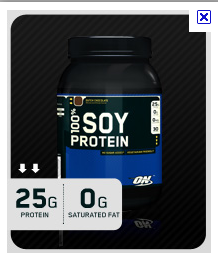
Soy protein has actually been around for quite a while and serves as a major player in the supplemental protein game, especially for vegans, vegetarians and the lactose intolerant. In recent years however, it has taken a dive in popularity, mainly due to the addition of other healthier, vegan friendly, lactose free products to the market like brown rice protein. In addition, some concentrations of soy protein have also been found to have higher levels of isoflavones and goitrogens (both absent in soy protein isolate). Isoflavones have shown evidence to increase estrogen in men and goitrogens can be noxious to the thyroid when over consumed. To add insult to injury, soybeans have the highest incidence of pesticide contamination among supplemental protein sources. They also contain phytic acid known to block the uptake of vitamins and minerals annnnnnnd they have enzyme inhibitors that reduce the effects of other enzymes necessary for digestion. Really tho?! All of that?! I’m not telling anyone that they shouldn’t use it or to stop using it, to each their own…all I’m saying is…”c’mon son…where they do that at?!”

“How Bad Do You Want It?”

Posted: October 8, 2011 by williampower in Behavior Modification, Exercise, Videos
Tags:

Typically, when people find themselves hard-pressed to lose weight, they automatically turn to dieting as their first step toward redemption. However, for people who are trying to lose weight, dieting isn’t always the best answer. Honestly, lifestyle changes are the best answers for anyone trying to trim down or become healthier, lifestyle changes that yes, often require dietary changes. But, for those who want to try other things before they delve into the arduous task of complete dietary overhaul, there are numerous things you can do to either cut some calories or burn some extra. Things like:

Exercising and increasing physical activity (see “Tips For Increasing Physical Activity”)

Eating Breakfast. When we sleep, our body is essentially fasting for the duration of time we spend counting sheep. Fasting for hours on end slows our metabolism and can eventually lead to fat retention and muscle breakdown. To break that fast (hence the name “breakfast”), you need to eat as soon as possible upon waking. This will rejuvenate your metabolism and replenish all the energy stores your body used up to power itself while you slept.

Relax on those midnight “pleasure food” snacks and refrigerator raids. If you get hungry over night, eat a vegetable based snack, drink some water and go to bed!

Eat more lean proteins. Diets with abundant protein intake have been shown to reduce overall appetite.

Be cognizant of liquid calories. Don’t drink your calories. Unless it’s a meal replacement and is used correctly, DON’T DRINK YOUR CALORIES. It’s that simple.

Eat smaller, and more often. Avoid insulin spikes that lead to fat storage by consuming smaller meals with less fat, less sugar and less calories. Avoiding excessive insulin spikes will improve your energy levels, prevent unnecessary fat storage and spike your metabolism (that’s a good thing).

Drink more water. You’ve been hearing the benefits of drinking water since grade school. You don’t need another list of reasons why you should. You + 8-12 glasses of water a day = #winning

When possible, cook your own food. That way you know what goes in it and have control over it. The more control your have over what you eat the better.

Whether dieting, not dieting, on the borderline of maybe kinda sorta thinking about dieting, try these tip out, follow them consistently and as your lifestyle changes so will you waistline → #fact

1. Weight train only 4 to 5 days a week. If growing is your primary concern then rest is paramount. Schedule breaks between intense sessions. For some, you may only need to workout 4 days and on your off days do absolutely nothing (no cardio or resistance training). Even if the gains don’t come right away this is not an indication that you need to workout more days a week. Be patient, stick to the formula and the gains will come.

2. Cut back on all the reps and sets. As a hard gainer, doing too many reps and too many sets is a recipe for overtraining. Heuristically, it seems better to train bigger body parts (legs, chest, back) with a 3 – 4 exercise per session rate and the smaller muscles (biceps, triceps, shoulders, etc.) 2 – 3 exercises per session.

3. Emphasize compound exercise where more than one muscle group is used at one time i.e. squat and military press.

4. Reduce cardio. Cardio done too often can burn too many calories over time. Use cardio sparingly to control fat stores but keep pace with your calorie intake to insure proper growth.

5. Keep it short and sweet. Hard gainer workouts shouldn’t last more than about an hour. Beyond that, excess cortisol (a catabolic hormone) can be released inhibiting growth of the muscles.

6. Consume more complex carbs to energize your intense workouts. Carbs are important because they provide energy and they control insulin, an anabolic hormone that forces energy into the muscle stimulating growth. Once again complex carbs should be your primary target in carbo-loading. For more info see “Summary of Macronutrients”.

7. Eat adequate high quality proteins. These are the building blocks to your muscles. For a breakdown of quality protein see “Summary of Macronutrients).

8. Use things like Echinacea and Ginger Root to increase appetite. An increased appetite will lead to the consumption of more calories which in the long and short term help you reach your goal.


1. Eating two or three huge meals with several hours in between
. Yes, you hard gainers (those who have trouble gaining quality muscle) are less inclined to turn these meals into fat due to your fast metabolisms, however, this method will also force your body to feed off stored energy (often muscle mass over body fat) in between meals. This makes it more than difficult for your body to retain muscle mass. The best solution for this is to eat 5 to 6 meals each day.

2. Consuming excess amounts of calorie-laden junk foods. Eating can be like a job for hard gainers. In an attempt to pack on some quick calories, hard gainers often turn to fast food like burgers or pizza. However, these foods contain entirely too much sugar, fat, and refined flour. They are better at adding inches to your waistline than adding inches to your biceps. In the fitness game, always emphasize quality over quantity. Eat quality whole foods and consume quality liquid calories when whole foods aren’t available. For some, weight-gaining products taken correctly can be a great way to gain mass.

3. Using too many energy drinks, which inhibit appetite. Caffeinated energy drinks play an important role in mustering energy and supporting mass gains. The problem is, they reduce appetite making it less likely for hard gainers to consume the quality calories necessary for mass gains. No one is saying to eliminate caffeine from your diet, just remember to consume it in moderation so that it doesn’t impact to intake of necessary quality calories.

4. Eating inconsistently. Most hard gainers have a tendency to eat well for two or three days then fall off the chuck wagon for lack of a better term. You have to eat consistently to grow. You should be hitting our target amount of calories each day.

5. Overtraining. More than a few hard gainers are under the assumption that more training means more muscle growth. Well that’s not entirely accurate. Muscles grow after you train, while you’re resting. Training too long or too often can be counterproductive.