 Bizzy Amor
 williampower
For those who are Broke from Amaree on Vimeo.
Introducing Dimetrius “Amaree” Taylor, WillGetYouFit client and now successful professional athlete #HardWorkPaysOff P.S. L.A. Fitness Heat 2010 Champs #IMJUSTSAYING #SOWHATGETMAD #WETOLDYOU
For those who are Broke from Amaree on Vimeo.
Introducing Dimetrius “Amaree” Taylor, WillGetYouFit client and now successful professional athlete #HardWorkPaysOff P.S. L.A. Fitness Heat 2010 Champs #IMJUSTSAYING #SOWHATGETMAD #WETOLDYOU

When it comes to running, the most important pieces of equipment in your training are your shoes. The reason for this is different shoes favor different types or running/training. Contrary to the whims of most, running shoes should not be chosen just because they look nice and match your favorite training outfit. Now this post isn’t intended to recommend a specific shoe to anyone because everyone has different feet and therefore require different footwear.

The first thing to consider when purchasing shoes is what their intended purpose is. The new Jordans might be a great shoe but not even MJ himself would wear them to run a marathon. That’s not what Jordans are made for. So that being said, what is the right shoe for your foot? Well the best shoe for your foot will combine a good fit and a good support of your biomechanical structure. Fit is self-exclamatory, but biomechanical structure refers to the “pronation” of your foot. Pronation is the description of how one’s foot contacts the ground when in motion. Your pronation can easily be observed by looking at the wear pattern of your old sneakers and shoes. If your shoes are leaning toward the outside you tend to under pronate when you walk or land on the outside of your heel instead of landing flat and even. If the opposite wear is observed then you tend to over pronate or land on the inside of your heel first. For a more accurate observation, specialty stores for running can measure your gait (the way you walk) with professional tools and give you and idea of how your gait is misaligned.
There are 4 ways to pronate upon contact with the ground:
Neutral – balanced and flexible shoes are required
Under pronation – required more cushioning and flexibility
Slight Over pronation – stability trainer
Severe Over pronation – control trainer
Once you have determined your pronation factor, picking the correct shoe becomes systematic, choose a shoe that compliments your gait. 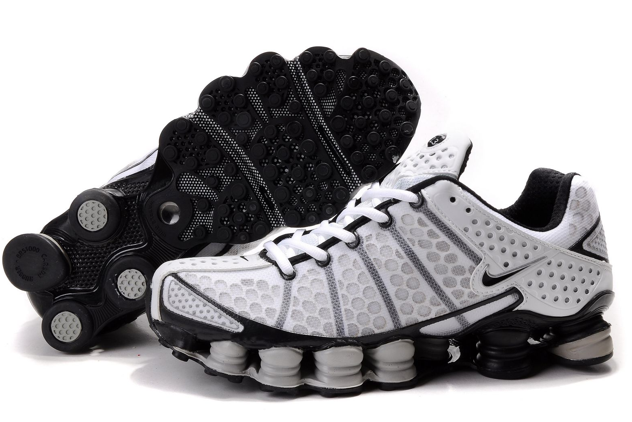 In doing this, remember to take into account the things that you consider when buying normal shoes, is there room in the front, does it comfortably rest on your heel, etc. Once all is said and done, if the shoe fits…wear it.

Procrastination can be the single biggest roadblock to success, after laziness and pure lack of ambition of course. Procrastination can be a guilt invoking habit that seems insurmountable for most. Sometimes the long-term benefit just doesn’t seem as appealing as the very immediate pleasure of putting the activity off for a few days, months or years. However, we’ve all been in a situation where procrastination has left us in a precarious position. Well if you’re ready for change, then its time to stop procrastinating. As I always say, in order to succeed you have to put yourself in the best position to be successful. That being said, here are some tips to help overcome those stubborn procrastinatory habits…
Tips to alleviate the likelihood of Procrastination:
1. Get someone else, preferably a friend, involved. If you have a task you’re reluctant to undertake, invite someone else to help you. It’s harder to procrastinate when others are involved.
2. Provide yourself with reinforcement. You’re much more likely to finish your task if you have something special to reward yourself with after.
3. Reenergize. Maintain good sleeping and dietary habits and you will have more energy to complete tasks.
4. Multitask – mix the less fun activity with an activity you like. Ex: watch that DVD you’ve been meaning to watch while cleaning he house.
5. Prioritize – organize your life and activities by importance; if the task isn’t paramount, don’t stress over it or let it hang over your head.
6. Envision the end result. What will be the outcome of the task? What will it mean to you? How will you benefit from it?
Use these 6 tips to help weed procrastination out of your lifestyle. As the old idiom goes, “don’t put off to tomorrow what you can do today.” After all, yesterday you said tomorrow…

In order for muscles to grow, three variables must coexist in the right ratios:
1. External stimulation – physical activity and/or exercise is necessary for muscles to be efficacious. Exercising (the purposeful engagement of a bodily activity that enhances or maintains physical fitness and overall health and wellness) uses energy and can cause microscopic damage to the muscle fibers (damage to muscle fibers is what eventually leads to muscle growth).
2. Nutrition – throughout the day and especially after intense exercise the muscles need to replenish their stores of fuel.
3. Rest – it is during the rest or recovery phase that the muscles repair the microscopic damage and grow.
Formula:
External Stimulation + Proper Nutrition + Rest = Good Muscle Health
In order to achieve maximal levels of muscle mass on a consistent basis one more variable has to be added to the formula:

4. Progression – progressive overload is essential if you are trying to increase or expedite muscle mass gains. Overload simply means giving your body slightly more than it’s used to working with, for example adding 10lbs to your current max bench press. Progression is the part of this equation that encourages you to turn that 1st 10lb addition to your max bench press into a 15lb increase, then a 20lb increase, and so on and so forth.
Formula:
External Stimulation + Proper Nutrition + Rest + Progression = Max Muscle Mass Potential
I’m sure by now you’ve all seen at least one advertisement for programs that offer “natural” techniques for detoxifying your body. Well quite frankly this is not a requirement for 99% of the people who purchase them. Believe it or not, your body is quite adroit at filtering itself. Along with the liver, the body already has multiple detoxification systems in place (the kidneys, the entire gastrointestinal tract, etc.) that do an efficacious job of eliminating toxins from the body within hours of intake. For the most part, many nutritionists and doctors agree that several of the detoxes offered to the public outside medical guidance are pointless and usually dangerous. Most detoxes are kin to fad diets; they promote weight loss based on doo doo science that has no relation to how the body actually works. No detoxification program has yet to produce evidence to show that it augments the body’s natural ability to filter itself.
Due to the fact that generally no side effects are reported post detox, detox diets are gaining popularity faster than celebrity sex tapes. But don’t be fooled, instead of working on a detox, work on fixing your lifestyle. If your dietary intake is so bad that you feel you need to be detoxed then your first step should be to correct the inadequacies in your diet. Eat a proper diet and let your body do the rest. If your body is having a reaction that it can’t fix on its own once your diet is corrected, chances are whatever you have isn’t going to be cured by any detox. For those of you who detox as a sort of mental springboard to get you on track, there are a few healthy ways to aid the body in its detoxification process, ways that will help you physically without hurting you financially.
Increase water intake:
Water is the most reliable source that can help you to get rid of multiple skin and health issues without taking any extra tablets or programs. Intake the proper amount of water on daily basis (8-12 cups) and this method will help you to release all of your bad toxins in your blood via urine.
Make fiber your friend:
Diets rich in fiber are also a great way to get rid of inner body problems. Fiber is good for your immune and digestive system and it helps your liver to generate blood effectively. Fruits, veggies, and whole grains are the best sources of fiber.
Avoid junk food:
That’s it.

Upon studying evidence of the past, studies show that our ancestors consumed a diet where the omega-6/omega-3 ratio was 1:1. Omega-3’s and omega-6’s are both essential fatty acids needed by the body for hormone production and healthy heart function. Over the years, our dietary habits have changed based on our geographic location, food availability and the technology utilized to produce food on a grand scale. The problem that has arrived from this natural progression is now in the western diet the ratio of omega-6’s to omega-3’s has jumped exponentially to 15:1!

Contemporary western diets have excessive amounts of omega-6 fatty acids as compared to the diet on which human beings evolved and their genetic patterns were derived. It is this imbalance that helps promote so much heart disease today. Excessive amounts of omega-6 polyunsaturated fatty acids (PUFA) and a very high omega-6/omega-3 ratio, as is found in today’s Western diets, promote the origination and escalation of many diseases, including cardiovascular disease, cancer, and inflammatory and autoimmune diseases. A lower omega-6/omega-3 ratio would exert a suppressive effect.
Omega-3’s exist in three forms. ALA (alpha-linolenic acid) is found in vegetable sources such as…
• flax seed oil
• soybean oil
• canola oil
Less potent sources are…
• walnuts
• dairy products
• beans
• broccoli
Omega-3’s are also found in two marine forms. They are EPA (eicosapentaenoic acid) and DHA (docosahexaenoic acid). They are found primarily in cold-water fatty fish such as…
• salmon
• mackerel
• lake trout
• herring
• sardines
• albacore tuna
Omega-6’s also exists in several forms. The first is LA (linoleic acid), which is found in…
• corn oil
• safflower oil
• soybean oil
• sunflower oil
• cottonseed oil
Two other forms of omega-6 are GLA (gamma-linolenic acid) and ARA (arachidonic acid). GLA is also found in plant-based oils. ARA is found in many animal based foods.
The World Health Organization suggests you consume an omega-6/omega-3 ratio of 1:1 as being optimal.

The first step in achieving a healthy balance is to minimize the use of oils rich in omega-6 fatty acids. Oils such as…
• corn
• sunflower
• safflower
• cottonseed
…are high in omega-6. Many margarines, salad dressings and mayonnaise are made from these omega-6 rich oils. Also, many processed foods contain these and similar oils. Pay attention to the labels.
The next step is to increase consumption of omega-3 rich foods. ALA (alpha-linolenic acid) is found in many vegetable sources. Also, high consumption of fish oils rich in omega-3 fatty acids has been shown innumerable times to reduce the risk of many heart conditions. So it is recommended to consume more cold-water fatty fish (listed above, beware of the mercury content of these fish). The third step is to add fish oil supplements to your daily diet.
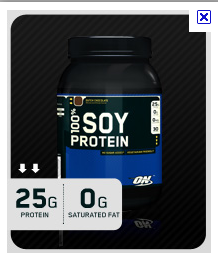
Soy protein has actually been around for quite a while and serves as a major player in the supplemental protein game, especially for vegans, vegetarians and the lactose intolerant. In recent years however, it has taken a dive in popularity, mainly due to the addition of other healthier, vegan friendly, lactose free products to the market like brown rice protein. In addition, some concentrations of soy protein have also been found to have higher levels of isoflavones and goitrogens (both absent in soy protein isolate). Isoflavones have shown evidence to increase estrogen in men and goitrogens can be noxious to the thyroid when over consumed. To add insult to injury, soybeans have the highest incidence of pesticide contamination among supplemental protein sources. They also contain phytic acid known to block the uptake of vitamins and minerals annnnnnnd they have enzyme inhibitors that reduce the effects of other enzymes necessary for digestion. Really tho?! All of that?! I’m not telling anyone that they shouldn’t use it or to stop using it, to each their own…all I’m saying is…”c’mon son…where they do that at?!”

It’s lean, its mean, and its holding its own on the protein scene. Brown rice protein is becoming very popular and I’m sure its raving reviews have everything to do with it. Everyone recognizes brown rice for its proverbial superiority to white rice. F.Y.I., brown rice and white rice both originate as nutritional equals, the only difference is white rice is raped of its nutritional goodness during its processing. Take away the bleaching process, the chemical agents and the extreme heat during the making of white rice and you get brown rice. But I digress; brown rice is considered a power food because it is inundated with vitamins, minerals and antioxidants. Sprouted brown rice is even better with more fiber and aminos than its unsprouted counterpart. The protein in brown rice is one of the highest quality plant based proteins available. It also contains enzymes that naturally separate the carbs from the protein yielding a product that is usually about 80% protein. Extra amino acids like arginine (a precursor to nitric oxide that dilates blood vessels and expedites the delivery of nutrients to the muscle) and glutamine (promotes recovery, muscle growth and improved immunity) also join the fray boosting this products’ market value. Couple this with increased digestibility and its hypoallergenic nature and you’ve got a contender. Feel free to see “what brown can do for you” (UPS Man voice).
One of the most ubiquitous supplemental protein sources today is Whey protein. Whey is the watery part of milk that is separated from the curd in the cheese making process.
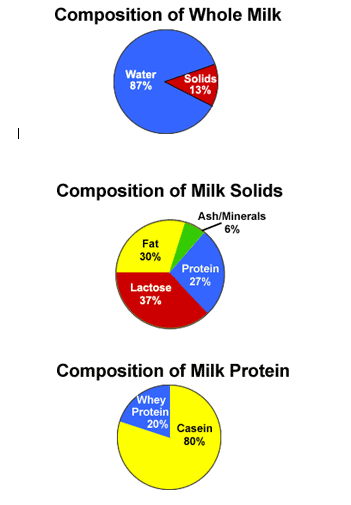
Whey has become extremely popular over the last decade because of the fact that it is a complete protein source i.e. it contains a full spectrum of the amino acids necessary for overall health. Whey is contraindicated however, for anyone with dairy allergies or lactose intolerance due to its derivation from milk. Whey protein has two concentration levels; whey protein isolate is the purest form of whey, about 90% of it is protein with a little fat and lactose. Whey protein concentrate, the lower grade of whey, can be anywhere from 25% to 85% protein, and tends to have higher traces of fat and lactose. When it comes to concentrate in a powdered form, it is usually sold at about 80% protein. Whey protein can also be hydrolyzed, meaning the aminos are pre broken down into peptides for easier digestion and a lesser incidence of allergic reactions. Whey protein is one of the highest rated protein sources on the PDCAAS (Protein Digestibility Corrected Amino Acid Score), the PER (Protein Efficiency Ratio) and the BV (Biological Value) evaluation scale making Whey one of the most efficient supplemental proteins…period.
 willgetyoufit