 Bizzy Amor
 williampower
For those who are Broke from Amaree on Vimeo.
Introducing Dimetrius “Amaree” Taylor, WillGetYouFit client and now successful professional athlete #HardWorkPaysOff P.S. L.A. Fitness Heat 2010 Champs #IMJUSTSAYING #SOWHATGETMAD #WETOLDYOU
For those who are Broke from Amaree on Vimeo.
Introducing Dimetrius “Amaree” Taylor, WillGetYouFit client and now successful professional athlete #HardWorkPaysOff P.S. L.A. Fitness Heat 2010 Champs #IMJUSTSAYING #SOWHATGETMAD #WETOLDYOU
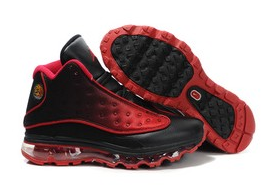
When it comes to running, the most important pieces of equipment in your training are your shoes. The reason for this is different shoes favor different types or running/training. Contrary to the whims of most, running shoes should not be chosen just because they look nice and match your favorite training outfit. Now this post isn’t intended to recommend a specific shoe to anyone because everyone has different feet and therefore require different footwear.

The first thing to consider when purchasing shoes is what their intended purpose is. The new Jordans might be a great shoe but not even MJ himself would wear them to run a marathon. That’s not what Jordans are made for. So that being said, what is the right shoe for your foot? Well the best shoe for your foot will combine a good fit and a good support of your biomechanical structure. Fit is self-exclamatory, but biomechanical structure refers to the “pronation” of your foot. Pronation is the description of how one’s foot contacts the ground when in motion. Your pronation can easily be observed by looking at the wear pattern of your old sneakers and shoes. If your shoes are leaning toward the outside you tend to under pronate when you walk or land on the outside of your heel instead of landing flat and even. If the opposite wear is observed then you tend to over pronate or land on the inside of your heel first. For a more accurate observation, specialty stores for running can measure your gait (the way you walk) with professional tools and give you and idea of how your gait is misaligned.
There are 4 ways to pronate upon contact with the ground:
Neutral – balanced and flexible shoes are required
Under pronation – required more cushioning and flexibility
Slight Over pronation – stability trainer
Severe Over pronation – control trainer
Once you have determined your pronation factor, picking the correct shoe becomes systematic, choose a shoe that compliments your gait. 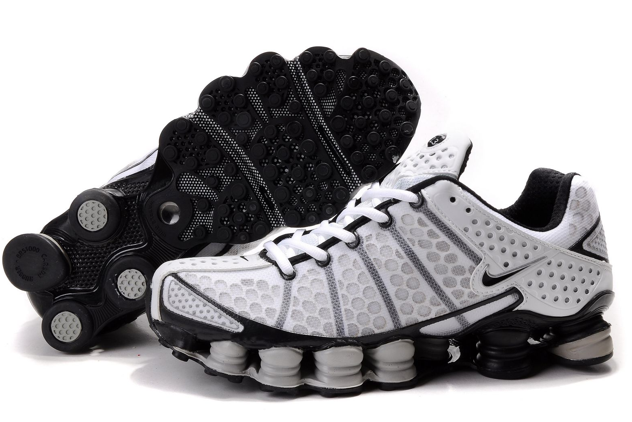 In doing this, remember to take into account the things that you consider when buying normal shoes, is there room in the front, does it comfortably rest on your heel, etc. Once all is said and done, if the shoe fits…wear it.

In order for muscles to grow, three variables must coexist in the right ratios:
1. External stimulation – physical activity and/or exercise is necessary for muscles to be efficacious. Exercising (the purposeful engagement of a bodily activity that enhances or maintains physical fitness and overall health and wellness) uses energy and can cause microscopic damage to the muscle fibers (damage to muscle fibers is what eventually leads to muscle growth).
2. Nutrition – throughout the day and especially after intense exercise the muscles need to replenish their stores of fuel.
3. Rest – it is during the rest or recovery phase that the muscles repair the microscopic damage and grow.
Formula:
External Stimulation + Proper Nutrition + Rest = Good Muscle Health
In order to achieve maximal levels of muscle mass on a consistent basis one more variable has to be added to the formula:
4. Progression – progressive overload is essential if you are trying to increase or expedite muscle mass gains. Overload simply means giving your body slightly more than it’s used to working with, for example adding 10lbs to your current max bench press. Progression is the part of this equation that encourages you to turn that 1st 10lb addition to your max bench press into a 15lb increase, then a 20lb increase, and so on and so forth.
Formula:
External Stimulation + Proper Nutrition + Rest + Progression = Max Muscle Mass Potential
1. Weight train only 4 to 5 days a week. If growing is your primary concern then rest is paramount. Schedule breaks between intense sessions. For some, you may only need to workout 4 days and on your off days do absolutely nothing (no cardio or resistance training). Even if the gains don’t come right away this is not an indication that you need to workout more days a week. Be patient, stick to the formula and the gains will come.
2. Cut back on all the reps and sets. As a hard gainer, doing too many reps and too many sets is a recipe for overtraining. Heuristically, it seems better to train bigger body parts (legs, chest, back) with a 3 – 4 exercise per session rate and the smaller muscles (biceps, triceps, shoulders, etc.) 2 – 3 exercises per session.
3. Emphasize compound exercise where more than one muscle group is used at one time i.e. squat and military press.
4. Reduce cardio. Cardio done too often can burn too many calories over time. Use cardio sparingly to control fat stores but keep pace with your calorie intake to insure proper growth.
5. Keep it short and sweet. Hard gainer workouts shouldn’t last more than about an hour. Beyond that, excess cortisol (a catabolic hormone) can be released inhibiting growth of the muscles.
6. Consume more complex carbs to energize your intense workouts. Carbs are important because they provide energy and they control insulin, an anabolic hormone that forces energy into the muscle stimulating growth. Once again complex carbs should be your primary target in carbo-loading. For more info see “Summary of Macronutrients”.
7. Eat adequate high quality proteins. These are the building blocks to your muscles. For a breakdown of quality protein see “Summary of Macronutrients).
8. Use things like Echinacea and Ginger Root to increase appetite. An increased appetite will lead to the consumption of more calories which in the long and short term help you reach your goal.
1. Eating two or three huge meals with several hours in between. Yes, you hard gainers (those who have trouble gaining quality muscle) are less inclined to turn these meals into fat due to your fast metabolisms, however, this method will also force your body to feed off stored energy (often muscle mass over body fat) in between meals. This makes it more than difficult for your body to retain muscle mass. The best solution for this is to eat 5 to 6 meals each day.
2. Consuming excess amounts of calorie-laden junk foods. Eating can be like a job for hard gainers. In an attempt to pack on some quick calories, hard gainers often turn to fast food like burgers or pizza. However, these foods contain entirely too much sugar, fat, and refined flour. They are better at adding inches to your waistline than adding inches to your biceps. In the fitness game, always emphasize quality over quantity. Eat quality whole foods and consume quality liquid calories when whole foods aren’t available. For some, weight-gaining products taken correctly can be a great way to gain mass.
3. Using too many energy drinks, which inhibit appetite. Caffeinated energy drinks play an important role in mustering energy and supporting mass gains. The problem is, they reduce appetite making it less likely for hard gainers to consume the quality calories necessary for mass gains. No one is saying to eliminate caffeine from your diet, just remember to consume it in moderation so that it doesn’t impact to intake of necessary quality calories.
4. Eating inconsistently. Most hard gainers have a tendency to eat well for two or three days then fall off the chuck wagon for lack of a better term. You have to eat consistently to grow. You should be hitting our target amount of calories each day.
5. Overtraining. More than a few hard gainers are under the assumption that more training means more muscle growth. Well that’s not entirely accurate. Muscles grow after you train, while you’re resting. Training too long or too often can be counterproductive.
1. Get at least 6 to 8 hours of sleep a night (or as close to it as you can for those 24-7 grinders like myself).
2. Learn how to incorporate deeper breaths into your breathing pattern to increase wellness and relieve some stress symptoms.
3. Incorporate “me time” into your life. No matter how busy or hectic your life may become, “me time” helps you refocus, reenergize and often recommit to any waning enthusiasms that are unfulfilled.
4. Get massages twice a month. Although considered a luxury, for some it’s becoming a necessity. Massages can relieve stress and tension carried in the body allowing you to move freer, think clearer and be more relaxed in times of stress.
5. Stretch daily. Stretching daily can help alleviate stress as well, both mentally and physically. It also can reduce, eliminate or prevent little aches and pains that normally limit your movement whether consciously on unconsciously. If it becomes less taxing to move you will more likely do more of it, keeping you more in tuned with a healthier lifestyle as opposed to a sedentary lifestyle.
6. Cold baths and showers can make a world of difference in terms of relaxed muscle tissue and rejuvenation from any type of overuse. They have also been show to increase circulation, increase fertility (in men), and increase immunity and energy.
7. Drink water, at least half your body weight in ounces every day.
8. Avoid high fructose corn syrup wherever possible.
9. Eat small frequent meals every 3 to 4 hours.
10. Incorporate foundational exercises into your exercise regimen. Don’t just work out the muscles you want everyone to see and envy, work out the muscles that do the little things that support your body’s movement (lower back, rear delts, forearms, calf muscles, neck, etc.)
Sweating is a release of water and sodium from the body’s sweat glands in an attempt by the body to regulate your body temperature. Sweat is typically found on your head, feet, the palms of your hands, and under your arms. The purpose of sweat is to cool the body by sitting on the surface of the skin and removing heat from the body as the sweat evaporates. The amount you sweat is directly dependent on how many sweat glands you possess with the average person being born with about 4 million. Women, on average, have more sweat glands than men but men’s’ sweat glands are typically more active. For both sexes, sweat glands can be activated by nervousness, anger, embarrassment, fear and physical exertion.
Sweating is most effective when it forms a glistening coat atop the skin allowing for even evaporation across the surface of the body. When sweat gets to the point that is starts dripping, that’s the body struggling to effectively control its own temperature and becoming less effective at cooling itself down. Contrary to popular belief however, the rate of sweating you are undergoing isn’t necessarily an indicator of how hard you are working. Your rate of sweating merely signifies how effective your body is at cooling itself down. This process can have several determining factors including humidity, environmental temperature, clothing and physical fitness.
Sweating and exertion especially do not correlate if you are returning to exercise after a long period of inactivity. When initially returning to an active state, especially when cardio is involved, you can sweat rather easily due to the fact it takes time for your sweat glands to adapt to the activity. The longer and the more consistently you do cardio the more efficiently you will start to sweat and the less you will “drip” at each level of intensity of exercise.
Instead of using rate of sweat as an indicator of your intensity of exercise, you should try using a “Borg Scale” to gauge your intensity. Since fatigue is highly correlated with your heart rate, the Borg Scale of Perceived Exertion (RPE) gives a much more subjective marker of your effort. Perceived exertion is how hard you feel like your body is working; it is based on physiological sensations experienced during physical activity (i.e. increased heart rate, increased rate of breathing, muscle fatigue, etc.). “Although this is a subjective measure, a person’s exertion rating may provide a fairly good estimate of the actual heart rate during physical activity” (Borg, 1998).
To use the Borg Scale, when exercising, rate your exertion between 6 and 20. According to the scale, each number represents a level of exertion:
BORG SCALE:
6, 7 – very, very light exertion
8, 9 – very light exertion
10, 11 – fairly light exertion
12, 13 – fairly hard exertion
14, 15 – hard exertion
16, 17 – very hard exertion
18, 19, 20 – very, very hard exertion
This is just one of the many ways to measure intensity that is more telling than rate of sweating. Just remember that some individuals can be extremely fit and still sweat profusely, regardless of the intensity of their exercise. This is more related to the number and effectiveness of their sweat glands than their physical prowess.
By: Will Power
A lot of people walk around making love to the idea that if they want to trim a certain area of their body then spot reduction is the way to go. But what is spot reduction and does this technique actually work? Spot reduction is the idea that exercises consistently done for a certain area of the body will reduce or eliminate fat in that area. As for whether it works, well…and I apologize for being anti-climactic so early on but, yes and no.
Studies published in the American Journal of Physiology have indeed shown evidence that when exercise is localized to a certain region of the body, blood flow to adipose tissue (fat) in that area is increased significantly. This increased blood flow triggers higher levels of “lipolysis” (break down and releasing of fat into the bloodstream to be used as fuel) in the targeted area suggesting that you do burn body fat in the specific area being trained.
The problem with this course of action when it comes to body fat reduction, and the reason spot reduction is constantly discredited, is that any fat loss through the spot reduction techniques, if any, is often insignificant in relation to the body as a whole. Overall body fat must be reduced to lose significant fat in any particular area. Fat deposition and reduction patterns are determined by genetics (see “Where Did My Fat Go?!”), hormonal distinction (sex) and age (lifecycle). Now it is true that despite the fact that fat is both gained and reduced throughout the entire body, a multitude of people tend to accumulate significant fat in their midsections (men and some women (usually post menopausal)) and hips and thighs (women and some men).
However, let it be known that you can do all the sit ups you want, the crunches, the leg raises, the torso rotations; you can try all those gimmicky products you see advertised on those infomercials made to take advantage of gullible consumers if you like. If you do, I promise you will have the nicest abs, legs and thighs you can imagine, right under all your layers of fat. At the end of the day, and I can’t reiterate this enough, if you want to reduce fat, exercise and proper dieting are your best keys to victory.
 willgetyoufit