Archive for September, 2011

We’ve all heard of training at your specified heart rate but what heart rate suits your goals the best? There are five proposed heart rate zones: Healthy, Temperate, Aerobic, Threshold, and Red Line.

Zone 1: Healthy Heart – 50 to 60% of HRmax. This zone is theorized to improve metabolic and emotional health. It is low intensity and has been shown to lower cholesterol, emotional stress and improves blood pressure.

Zone 2: Temperate – 60 – 70% of HRmax. This zone is more of a moderate intensity and burns more calories via fat than zone 1. Sometimes this is also called the “recovery zone” used after workouts to remove lactic acid and expedite fat utilization.

Zone 3: Aerobic – 70 to 80% of HRmax. Zone 3 is good for improvements in endurance, the ability to sustain exercise for long periods of time before fatiguing. It is theorized to work by improving the body’s production of energy at the cellular level, enhancing fat utilization and increasing total calorie expenditure. This level would be on the harder side for the average person who is in decent shape.

Zone 4: Threshold – 80 to 90% HRmax.
This zone is usually recommended only for athletes; however, it is for anyone who wants to get fitter faster. The reason to spend time in this zone is to improve aerobic capacity.

Zone 5: RED LINE – 90 to 100% HRmax. This is near to all out effort and only can be sustained for seconds at a time even by top athletes. This zone is contraindicated for anyone not in top physical condition due to its potential metabolic stress on the body.

Ref — I.F.J. (2011)

1. Weight train only 4 to 5 days a week. If growing is your primary concern then rest is paramount. Schedule breaks between intense sessions. For some, you may only need to workout 4 days and on your off days do absolutely nothing (no cardio or resistance training). Even if the gains don’t come right away this is not an indication that you need to workout more days a week. Be patient, stick to the formula and the gains will come.

2. Cut back on all the reps and sets. As a hard gainer, doing too many reps and too many sets is a recipe for overtraining. Heuristically, it seems better to train bigger body parts (legs, chest, back) with a 3 – 4 exercise per session rate and the smaller muscles (biceps, triceps, shoulders, etc.) 2 – 3 exercises per session.

3. Emphasize compound exercise where more than one muscle group is used at one time i.e. squat and military press.

4. Reduce cardio. Cardio done too often can burn too many calories over time. Use cardio sparingly to control fat stores but keep pace with your calorie intake to insure proper growth.

5. Keep it short and sweet. Hard gainer workouts shouldn’t last more than about an hour. Beyond that, excess cortisol (a catabolic hormone) can be released inhibiting growth of the muscles.

6. Consume more complex carbs to energize your intense workouts. Carbs are important because they provide energy and they control insulin, an anabolic hormone that forces energy into the muscle stimulating growth. Once again complex carbs should be your primary target in carbo-loading. For more info see “Summary of Macronutrients”.

7. Eat adequate high quality proteins. These are the building blocks to your muscles. For a breakdown of quality protein see “Summary of Macronutrients).

8. Use things like Echinacea and Ginger Root to increase appetite. An increased appetite will lead to the consumption of more calories which in the long and short term help you reach your goal.


1. Eating two or three huge meals with several hours in between
. Yes, you hard gainers (those who have trouble gaining quality muscle) are less inclined to turn these meals into fat due to your fast metabolisms, however, this method will also force your body to feed off stored energy (often muscle mass over body fat) in between meals. This makes it more than difficult for your body to retain muscle mass. The best solution for this is to eat 5 to 6 meals each day.

2. Consuming excess amounts of calorie-laden junk foods. Eating can be like a job for hard gainers. In an attempt to pack on some quick calories, hard gainers often turn to fast food like burgers or pizza. However, these foods contain entirely too much sugar, fat, and refined flour. They are better at adding inches to your waistline than adding inches to your biceps. In the fitness game, always emphasize quality over quantity. Eat quality whole foods and consume quality liquid calories when whole foods aren’t available. For some, weight-gaining products taken correctly can be a great way to gain mass.

3. Using too many energy drinks, which inhibit appetite. Caffeinated energy drinks play an important role in mustering energy and supporting mass gains. The problem is, they reduce appetite making it less likely for hard gainers to consume the quality calories necessary for mass gains. No one is saying to eliminate caffeine from your diet, just remember to consume it in moderation so that it doesn’t impact to intake of necessary quality calories.

4. Eating inconsistently. Most hard gainers have a tendency to eat well for two or three days then fall off the chuck wagon for lack of a better term. You have to eat consistently to grow. You should be hitting our target amount of calories each day.

5. Overtraining. More than a few hard gainers are under the assumption that more training means more muscle growth. Well that’s not entirely accurate. Muscles grow after you train, while you’re resting. Training too long or too often can be counterproductive.

Sleeping is a natural state of reduced or absent consciousness where most sensory activity and nearly all voluntary muscle activity is inactive. Sleep is also a hyper anabolic state where the growing and rejuvenating of the body take precedence. Sleeping is regulated by your “circadian clock” which is governed by a “circadian rhythm”, a time frame that encompasses about 24 hrs. worth of biological, physiological, and psychological processes that reoccur daily. The amount of sleep recommended for each person is based on their circadian rhythm and their age. On average:

Age and condition Average amount of sleep per day
Newborn up to 18 hours
1–12 months 14–18 hours
1–3 years 12–15 hours
3–5 years 11–13 hours
5–12 years 9–11 hours
Adolescents 9–10 hours
Adults, including elderly 7–8 hours
Pregnant women 8(+) hours

“Sleep offset” or awakening is also controlled by your circadian rhythm which is adaptable; this is why some people who often rise early sometimes end up awakening on a off day around the time they normally get up, even when relatively sleep deprived.
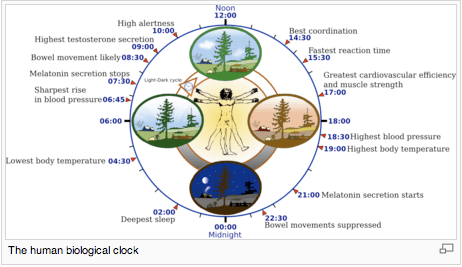
Even with our circadian clock regulating our sleep patterns however, we’ve all come across nights where something has kept you from a restful slumber. That’s natural since external factors do affect our sleeping patterns. For those of you that have a more consistent problem, there are some techniques that may help to settle you down and improve your sleeping patterns and quality of sleep. For a better night’s sleep, try incorporating these sleeping tips and making them a part of your daily routine:

Go to bed and wake up at the same time, even on weekends. It becomes easier to fall asleep at night when you schedule a consistent sleep-wake cycle. As this is one of the most important sleep tips, always ensure a regular sleep and wake cycle.

Exercise regularly. Regular physical exercise during the day will help you fall asleep faster and realize a more restful sleep.

Start a relaxing bedtime routine. Ease the transition between wakefulness and sleepiness through relaxing activities such as reading a book, listening to soothing music or taking a hot bath. Perform the same routine each night to signal your body when it is time to wind down.

Go to bed when tired. Forcing yourself to sleep will only create stress. If you can’t fall asleep within 15 to 20 minutes, get out of bed and do something sedentary until tired.

Avoid eating or drinking large amounts before bed. Eating before bed could result in heartburn, which can disrupt your sleep. Drinking before bed could also cause you to get up frequently throughout the night to use the bathroom. Eat a light dinner at least two hours before bed.

Limit daytime sleep to a half-hour. Prolonged daytime naps can steal hours from your overnight rest. Avoid taking naps longer than 30 minutes during the day.

Set up a conducive sleeping environment. Bedrooms that are cool, dark, quiet and comfortable are best for quality sleep.

Avoid stimulants in the evening. Caffeine, nicotine and alcohol can all keep you awake at night.

(Ref.) – American Board of Sleep Medicine

The position in which you sleep also plays a vital role in how fast you fall asleep, the quality of sleep, and the effects of the sleep thereafter. Typically, the best sleep positions are:

Lying on your back. This position is good for preventing neck and back pain, reducing acid reflux, minimizing wrinkles and maintaining perky breasts (in women). Sleeping on your back allows for the spine and neck to maintain a neutral position preventing any extra curves in your back (causing soreness, aches and pains from overworked, overstretched, or tweaked back muscles). This also eliminates acid reflux because the esophagus rests above the stomach, preventing acid and food from coming back up. In addition, the fact that your facing upwards means nothing is against your face for hours at a time preventing wrinkle formation. For women, your breasts are supported when lying on your back preventing eventual sagginess. The only bad thing is lying on your back can increase the likelihood of snoring or exacerbate any snoring issues you already have.

*Lying on your stomach when sleeping is the worst position specifically for the opposite of all the reasons lying on your back is beneficial.

Sleeping on your side. This position is good because it prevents neck and back pain, eases snoring, reduces acid reflux and improves blood flow in pregnant women. However, for women, years of sleeping with a pillow contouring one side of your face can eventually lead to wrinkles earlier in life. Also, it can lead to saggy breasts over time because when lying on your side your breasts aren’t supported leading to stretched ligaments under the mammory tissue.

These are just a few recommended tips to help you fall into a deeper sleep faster. If you have serious sleep issues that persist for days or weeks at a time, you should see a physician immediately since sleep deprivation can have very dangerous side effects.

1. Get at least 6 to 8 hours of sleep a night (or as close to it as you can for those 24-7 grinders like myself).

2. Learn how to incorporate deeper breaths into your breathing pattern to increase wellness and relieve some stress symptoms.

3. Incorporate “me time”
into your life. No matter how busy or hectic your life may become, “me time” helps you refocus, reenergize and often recommit to any waning enthusiasms that are unfulfilled.

4. Get massages twice a month. Although considered a luxury, for some it’s becoming a necessity. Massages can relieve stress and tension carried in the body allowing you to move freer, think clearer and be more relaxed in times of stress.

5. Stretch daily. Stretching daily can help alleviate stress as well, both mentally and physically. It also can reduce, eliminate or prevent little aches and pains that normally limit your movement whether consciously on unconsciously. If it becomes less taxing to move you will more likely do more of it, keeping you more in tuned with a healthier lifestyle as opposed to a sedentary lifestyle.

6. Cold baths and showers can make a world of difference in terms of relaxed muscle tissue and rejuvenation from any type of overuse. They have also been show to increase circulation, increase fertility (in men), and increase immunity and energy.

7. Drink water, at least half your body weight in ounces every day.

8. Avoid high fructose corn syrup wherever possible.

9. Eat small frequent meals every 3 to 4 hours.

10. Incorporate foundational exercises into your exercise regimen. Don’t just work out the muscles you want everyone to see and envy, work out the muscles that do the little things that support your body’s movement (lower back, rear delts, forearms, calf muscles, neck, etc.)

Sweating is a release of water and sodium from the body’s sweat glands in an attempt by the body to regulate your body temperature. Sweat is typically found on your head, feet, the palms of your hands, and under your arms. The purpose of sweat is to cool the body by sitting on the surface of the skin and removing heat from the body as the sweat evaporates. The amount you sweat is directly dependent on how many sweat glands you possess with the average person being born with about 4 million. Women, on average, have more sweat glands than men but men’s’ sweat glands are typically more active. For both sexes, sweat glands can be activated by nervousness, anger, embarrassment, fear and physical exertion.

Sweating is most effective when it forms a glistening coat atop the skin allowing for even evaporation across the surface of the body. When sweat gets to the point that is starts dripping, that’s the body struggling to effectively control its own temperature and becoming less effective at cooling itself down. Contrary to popular belief however, the rate of sweating you are undergoing isn’t necessarily an indicator of how hard you are working. Your rate of sweating merely signifies how effective your body is at cooling itself down. This process can have several determining factors including humidity, environmental temperature, clothing and physical fitness.

Sweating and exertion especially do not correlate if you are returning to exercise after a long period of inactivity. When initially returning to an active state, especially when cardio is involved, you can sweat rather easily due to the fact it takes time for your sweat glands to adapt to the activity. The longer and the more consistently you do cardio the more efficiently you will start to sweat and the less you will “drip” at each level of intensity of exercise.

Instead of using rate of sweat as an indicator of your intensity of exercise, you should try using a “Borg Scale” to gauge your intensity. Since fatigue is highly correlated with your heart rate, the Borg Scale of Perceived Exertion (RPE) gives a much more subjective marker of your effort. Perceived exertion is how hard you feel like your body is working; it is based on physiological sensations experienced during physical activity (i.e. increased heart rate, increased rate of breathing, muscle fatigue, etc.). “Although this is a subjective measure, a person’s exertion rating may provide a fairly good estimate of the actual heart rate during physical activity” (Borg, 1998).

To use the Borg Scale, when exercising, rate your exertion between 6 and 20. According to the scale, each number represents a level of exertion:

BORG SCALE:

6, 7 – very, very light exertion

8, 9 – very light exertion

10, 11 – fairly light exertion

12, 13 – fairly hard exertion

14, 15 – hard exertion

16, 17 – very hard exertion

18, 19, 20 – very, very hard exertion

This is just one of the many ways to measure intensity that is more telling than rate of sweating. Just remember that some individuals can be extremely fit and still sweat profusely, regardless of the intensity of their exercise. This is more related to the number and effectiveness of their sweat glands than their physical prowess.

5 Tips for Grocery Shopping on a Budget

Posted: September 17, 2011 by williampower in Nutrition
Tags: , , ,

• Make a grocery list of favorite foods that fit into your goal oriented diet. In this list address nutritional value of the foods, convenience, price and accessibility. Since grocery stores are ergonomically designed to entice shoppers to buy, creating a preconceived shopping list will curb impulse buying.

• Favor frozen over fresh fruits and veggies. Frozen fruits and veggies are nutritious yet less expensive and less perishable then their fresh equivalents. If you are buying fresh produce, in season produce is usually more economical.

• Shop for sales. Use discounts and coupons. It pays to check weekly circulars for coupons.

• Avoid shopping when hungry. Food choices are heavenly influenced by appetite and visual cues. Grocery shopping on an empty stomach increases the likelihood of impulse buys.

• Use bulk buying and coupons wisely. Potato sack sized bags of cauliflower and 5lbs tubs of cottage cheese will probably go to waste. Buy only what you know you will use. If you are unintentionally wasteful then its best to stick with store brands of reasonable sizes. Coupons do indeed save you money but only use them on things you would normally buy.

by: Will Power

Alcohol is the most readily used and abused drug in the United States today. In some circles, alcohol is referred to as a food and a drug because of its calorically dense nature. Alcohol has 7 calories per gram, almost twice that of both carbohydrates and protein. Alcoholic calories are considered “empty” calories because they only contain negligible amount of vitamins and nutrients. In fact, alcohol is considered and anti-nutrient because of its interference in the absorption of vitamins and minerals in the body. This interference causes a disruption in the metabolism of both carbohydrates and fat in the body. Alcohol inhibits the production of the enzyme that helps break down fat in the body thereby ceasing your fat burning process for a significant period of time. Note that often times when consuming alcohol, you also consume fatty foods that deliver fat to the body that now, post alcohol intake, will not be broken down. If fat cant be broken down and used directly after ingestion, it is automatically stored until it can be used. In addition to that, this excess storage of fat can stress the liver causing the body to over use and deplete its glycogen (sugar) levels. Over time with chronic drinking, the body will develop a strong tendency to store body fat at all times in an adaptation to the alcohol’s stress the liver. This is a big contraindicator for anyone looking to trim down or lean up.

In terms of alcoholic beverages, I managed to narrow down a list of some of the top alcohols guaranteed to make you fat over time. Ill start with one of the top dogs, “The Devil’s Advocate” as I call it:

Long Island Iced Tea (9oz) (on average 543 cals) – a mix of 5 different alcohols, Sweet and Sour Mix and Coke. It may look like tea but mind you a long island iced tea made the right way can have as many calories in one glass a McDonald’s Big Mac. That’s right every time you suck down a Long Island you are consuming calories close to that of one of the fattiest fast foods in America…so yea…bottoms up buddy. Through the teeth, over the gums, watch out waistline, here it comes!

Mai Tai (9oz) (620 cals) – a mix of Light Rum, Dark Rum, Crème de Almond, Sweet and Sour Mix and Pineapple Juice. This little guy right here will run you the same caloric overdose as a Wendy’s Double Cheeseburger.

Mud Slide (6oz) (560 cals) – Vodka, Kahlua, Baily’s Irish Cream, Half and Half. That’s two slices of Pizza right there…per glass…Im just saying…PER…GLASS…

Piña Colada (12oz) (590 cals) – Rum, Coconut Cream, Pineapple Juice. This is about 100 cals MORE than a McDonald’s large fries.

Mararita (10oz) (550 cals) – Tequila, Margarita/Sour Mix, Triple Sec, Lime Juice, 1tbsp Sugar. Equivalent to a Taco Bell Chicken Quesadilla. Enough said.

*Side Note – Just to add further perspective, the average 150 pound person would have to jog for about 30 minutes to burn about 300 cals.

Frankly, for all of you who have weight loss goals but like to “indulge a little” (usually meaning a lot) while enjoying the night life, just understand what you are doing and just how much of your hard work you’re throwing away. These are just a few drinks out of thousands of alcoholic beverages that do a great job of pushing people farther and farther away from their weight loss goals. Please understand, this article is not intended to make anyone stop drinking, that’s a personal battle everyone has to take up with themselves. This post is merely to help those who don’t know to realize exactly what they’re doing to their bodies and their goals when they drink.

For those who feel that cutting out alcohol is simply out of the question, there are a few ways you can lessen the effects alcohol has on you and your long term weight loss goals. First off be cognizant of what and how much you are drinking. Research the calorie content of your favorite drinks. This alone my convince you to find substitutions for higher calorie drinks. Secondly, having water between drinks can help prevent you from drinking too much, can help prolong drunkenness and can keep you hydrated which can help avoid that next day hangover. Thirdly, know your own weaknesses. If you know you overdrink in certain situations, be prepared. At least eat a healthy snack before hand to avoid drinking on an empty stomach (which expedites intoxication). Fourthly, keep your goals in mind. Think about how much work you will have to do to burn off the cals in that refill. Is one more drink worth a 30 min jog?! Lastly, avoid high calorie drinks. Typically, drinks that include mixers like Sweet and Sour Mix, juice or club soda will have more calories.

The key is to remember that alcohol, like everything else, should be consumed in moderation. Moderation is the key when, or should I say if, it comes to enjoying cocktails while watching your weight. Treat alcohol the same way you treat other things in your diet – as something you can enjoy from time to time without going overboard.

by: Will Power

Recently, the daughter of one of my clients posed an interesting question to me, “When I pee…what color should it be?” Part of me laughed at first solely based on how she phrased it (any question that rhymes in my eyes is comedic gold for some reason) but, nevertheless, I can’t pretend like it wasn’t a good question. I mean we all do it. Some of us do it once a day. Some of us do it twice a day. Some of us do it more times a day then they can count on one hand. But how many of us actually stop and think about what we…excrete. Even if we did, how many of us actually know what our urine is supposed to look like besides the proverbial “lemonade color as opposed to an apple cider color”? As true as that is, what about all you jocks who suck down all those multivitamins and are peeing out neon green hulk juice (yea…yea I went there). Or, how about those whose pee produces more foam than actual urine. I apologize for the graphic imagery but the fact of the matter is we all produce different urine based on how we live, but which urine is healthy and which urine is telling you that you’re in trouble?

For those of you who don’t know, urine is a water waste product that passes through your urinary tract and is expelled from your body through your urethra. This is how your body removes noxious chemicals, dead blood cells, excess water, ammonia, proteins, salts, hormones and other excrements the body deems unnecessary. 95% of it is water, but the rest of the contents vary depending on what you have eaten, drank, inhaled or been exposed to. Urine is created and regulated by the kidneys. The kidneys filter the blood and pushes it back into the blood vessels; whatever’s left → urine.

Now as mentioned earlier, urine can come in different colors and consistencies. The most common among these colors is a light yellow urine which typically signifies a healthy urine. It will usually have low odor and little foam. Following that, other colors signify:

Clear urine – higher concentration of water than waste; could mean you are well hydrated or overhydrated.

Dark goldish urine – dehydrated; higher concentration of waste than water which also means stronger odor as well.

Blue urine – usually a side effect of some medications since some oratory meds contain dyes (those little blue pills don’t always start off blue).

Green urine – usually a by product of foods you have eaten in excess or an excess influx of vitamins and minerals through supplementation.

Red urine – typically signifies “Hematuria” or blood in the urine. This may be a serious condition related to your kidney, prostate or bladder (might want to seek medical attention immediately).

Orange urine – could be a sign of Jaundice (which can mix bile into urine); if urine is orange for more than a few days seek med. help).

Cloudy urine – can be caused by urinary tract infection, bladder infection, kidney stones, gonorrhea or specifically for men a mixing of premature ejaculate in the urine. Seek med help if cloudy urine persists over several bathroom visits.

Honestly, most changes in urine color are harmless and temporary; they are usually the result of certain foods, dyes, supplements or prescription drugs recently ingested. Occasionally though, unusual urine color can indicate an infection or serious illness. You should consult a physician if changes in urine color persist or don’t seem linked to medications or food.